Studio Stories
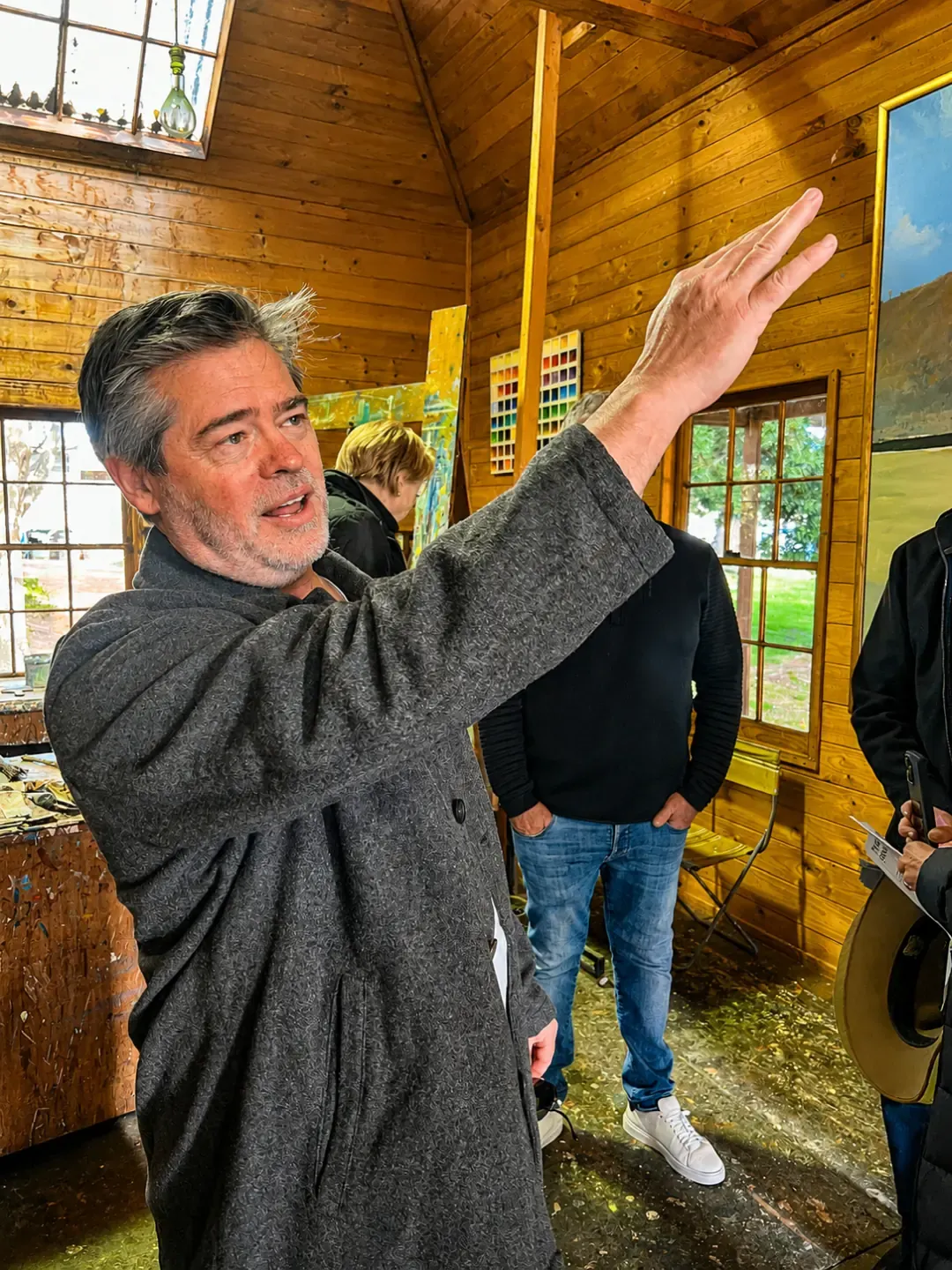
Bundanon Trust recently asked me back to walk people through the house and studio and give a talk. I have known that house twice over, in two different lives.
The first was the 1970s. My parents owned the property with the dealer Frank McDonald, and I grew up there. From the outside it was a working farm: Arab horses, prize cattle, mud. Inside it was something closer to a European salon. My mother hung a Goya in the living room of what had until recently been a ruin. Brett Whiteley came through. John and Valerie Olsen, Tim Storrier. At one point somebody organised an open art competition and my twelve-year-old brother won it, beating both Arthur Boyd and Whiteley. Arthur thought this was the funniest and best possible outcome.
The kitchen carried the household’s real character. A methadone bottle sat in the fridge next to the milk. My mother tried a New Guinean firing method on a batch of pottery and the kiln exploded; she and Arthur split the replacement cost, three hundred dollars each. Whiteley threw a pot that slumped and scrunched down into an accidental figure, better than anything he had intended, and he never touched clay again. Arthur played the piano most evenings with total conviction and no ability whatsoever. Pure noise and randomness, made with enormous enjoyment.
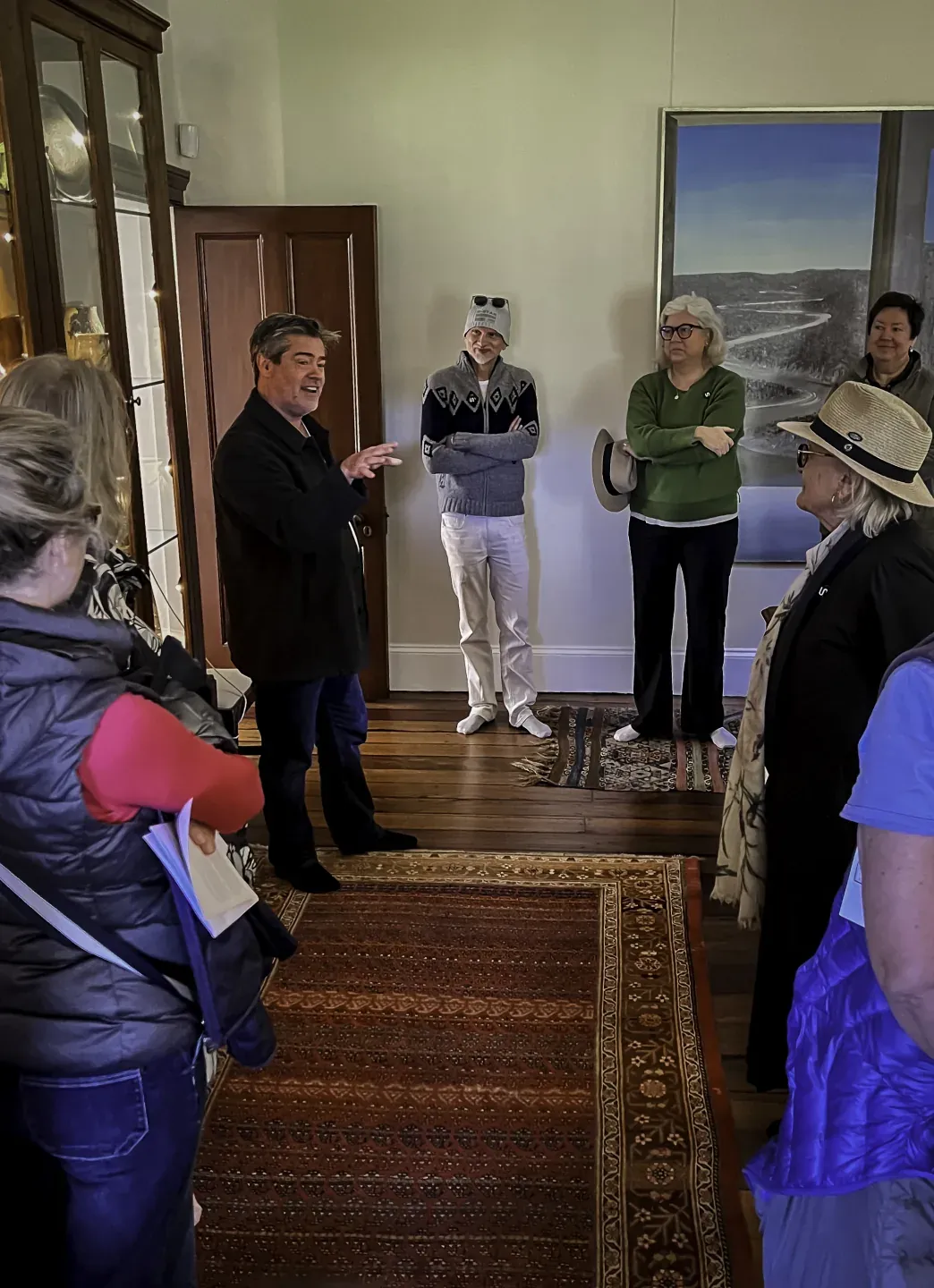
The second Bundanon began in 1987, when I came back as Arthur’s studio assistant. Two years. My morning started at the palette, laying his colours out in the same positions they occupied the day before, and the day before that.
What I learned there had almost nothing to do with technique. Arthur treated paintings as objects that had a job to do. If a canvas got dirty he carried it out onto the lawn, laid it on the grass and hosed it. “Paintings come and go,” he said. “It’s the idea that lives forever.”
He kept a box of cards: his own sketches, drawings his children had made, scraps. He would reach in without really looking, pull one out, and that was the seed for the next week’s work. No agonising. When he painted branches he held four brushes at once between his fingers and went at the canvas like a drummer, all percussion. Showing a group how he did that, standing in his studio with his brushes in my hand, was the strangest and best part of the day.
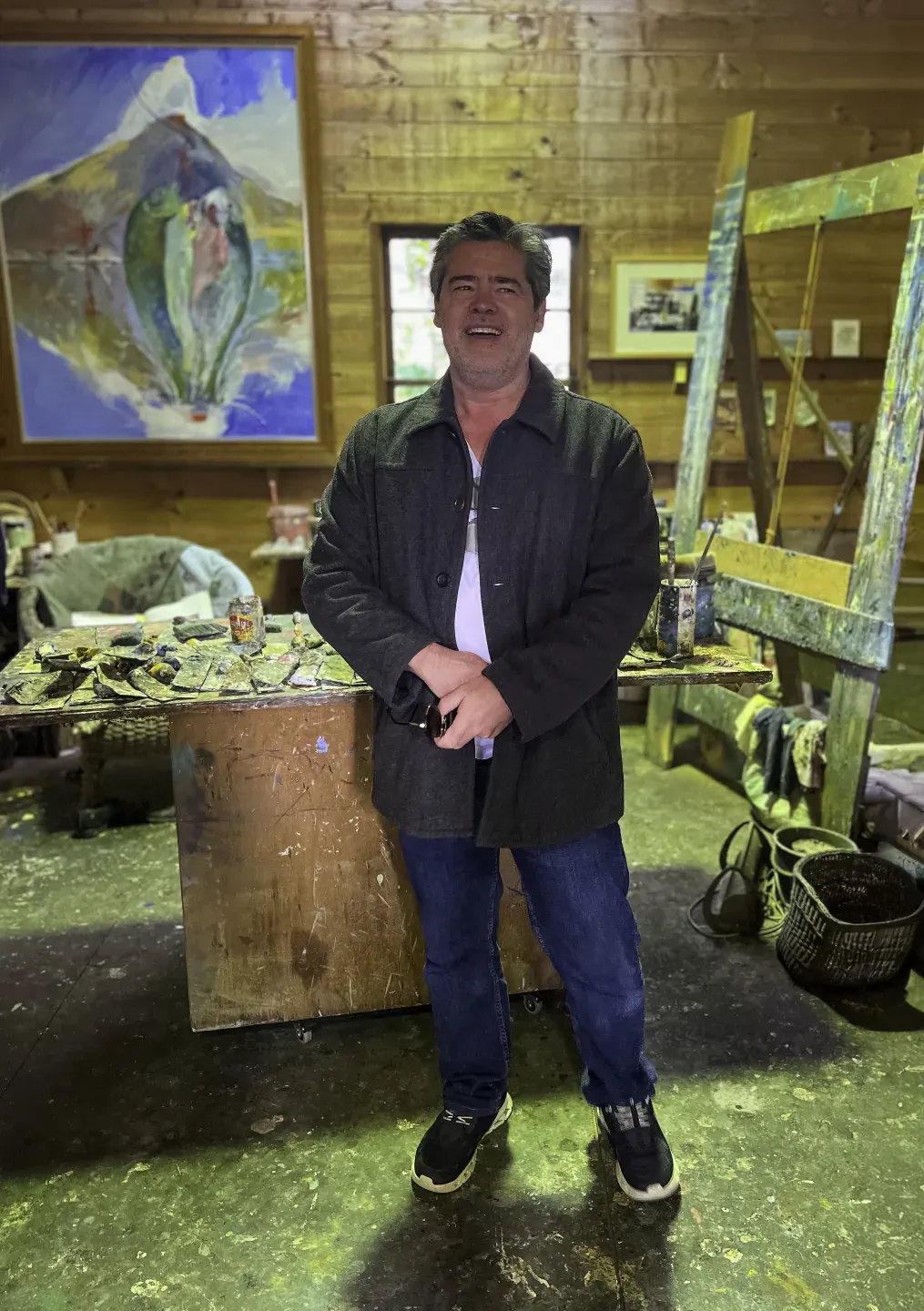
Behind a cupboard in the studio I once found a lead tube of cadmium red. Arthur had made the pigment himself in London after the war, out of material from a bombed German factory. It was the most potent red I have handled. “That was the last tube that I made,” he said, without a flicker of regret, and we used it. It went into the bushfire paintings, which is why the sunsets in those works go that particular pink.
I arrived at Bundanon believing that being an artist meant being selfish and slightly destructive, that the work required damage. Arthur taught me the opposite, mostly by example and mostly about brushes. Clean them properly. Wash your hands. Come back tomorrow. Making is a simple form of being. You do the work, and then you clean up.
In 1993 Arthur and Yvonne Boyd gave Bundanon to the Australian people. As he put it: if somebody wants it, they need it more than I do.
I could not imagine becoming an artist until Arthur Boyd taught me how to wash my hands.
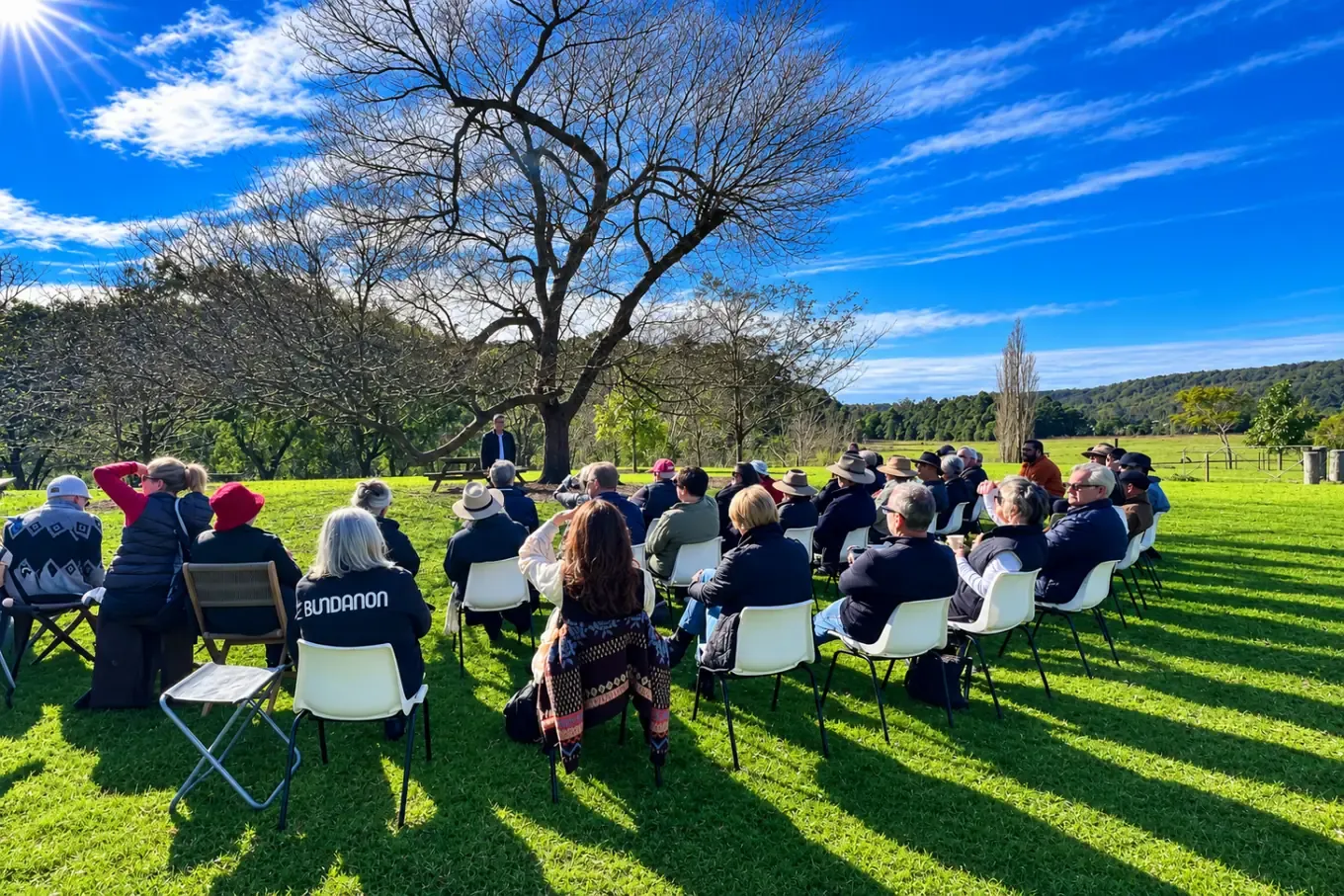
The talk was “Studio Stories”, given at Bundanon Homestead on 26 July 2026 during the Boyd Stay Weekend: ninety minutes, four stops, ending in Arthur’s studio. Thank you to Rachel Kent, Chief Executive Officer of the Bundanon Trust, and the team for having me back, and to Leanne Windsor, who hosted the day and took these photographs.